

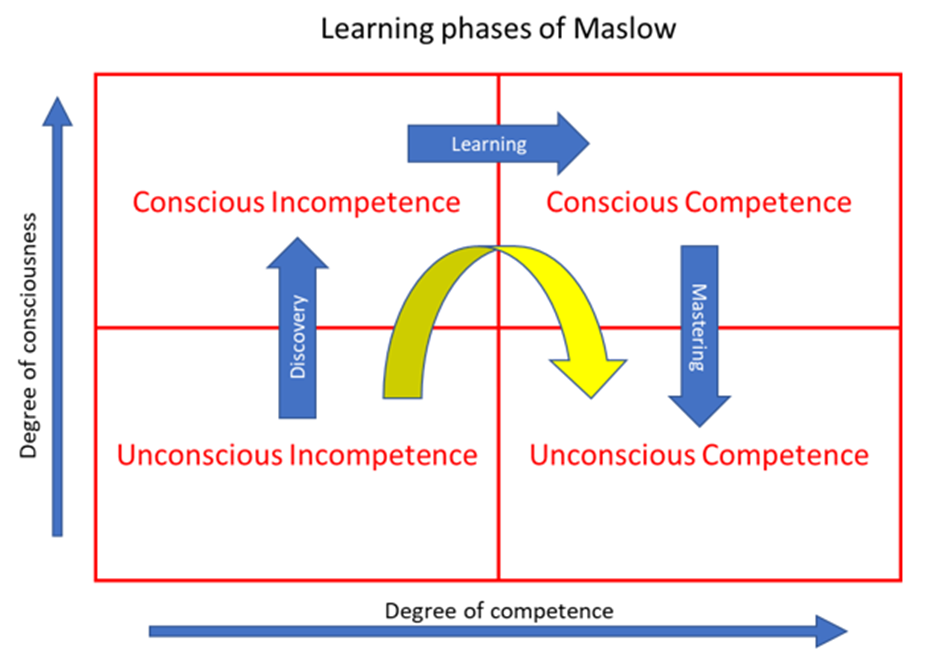
Learning any new skill follows a predictable pattern, one of the most widely used frameworks describing this process is the Learning Stages Model, often associated with the work of Abraham Maslow and later applied in many training programs.
The model describes how individuals move from lack of awareness toward mastery, understanding these stages helps individuals approach learning with greater patience and effectiveness.
The learning process is typically described in four stages.
1. Unconscious Incompetence
At this stage individuals are unaware of what they do not know. Because they lack experience, they may assume a skill is easier than it actually is.
2. Conscious Incompetence
Once individuals attempt the skill, they realize their limitations. This stage can feel uncomfortable because mistakes become visible, however it is also the moment when learning truly begins.
3. Conscious Competence
With practice individuals begin to perform the skill successfully, however it still requires concentration and effort.
The behavior has not yet become automatic.
4. Unconscious Competence
After sufficient practice the skill becomes natural, the individual can perform it automatically without conscious effort.
Many professional skills eventually reach this stage.
5: Teaching Others
Some frameworks add a fifth stage.
At this level individuals can explain the skill clearly to others, teaching requires deep understanding of the underlying processes.
Why the Learning Stages Matter?
Understanding the learning stages helps individuals remain patient during development, the discomfort of conscious incompetence is a natural part of learning rather than a sign of failure. Professionals who persist through this stage often experience rapid improvement.
Conclusion
The Learning Stages Model provides a useful roadmap for skill development.
By recognizing the different stages, individuals can approach learning with realistic expectations and greater resilience.






Add comment