

The NLP Logical Levels Model Explained
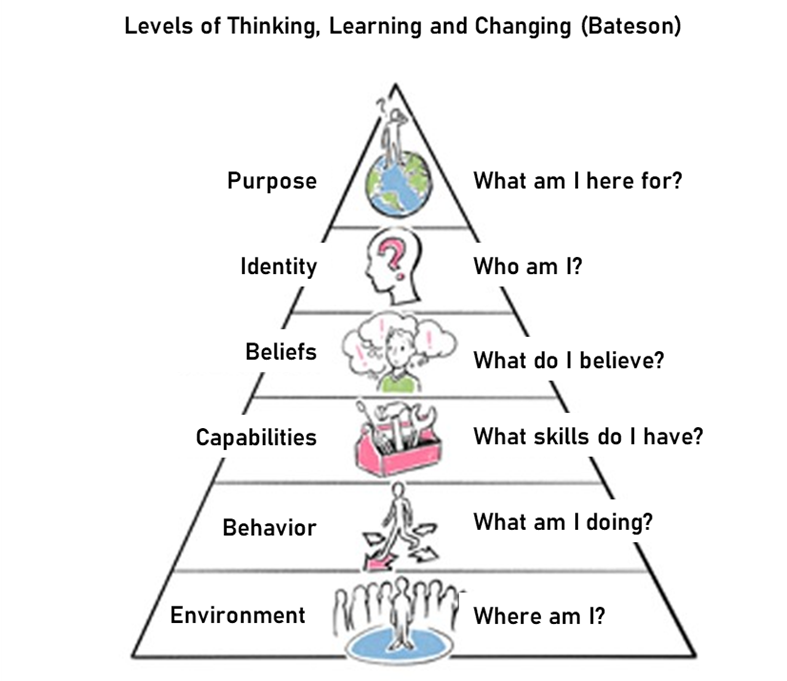
One of the most influential models in NLP is the Logical Levels Model, originally developed by anthropologist Gregory Bateson and later expanded by Robert Dilts.
The model describes different levels at which human thinking, learning and behavior operate.
Understanding these levels helps explain why some changes are easy while others require deeper transformation.
The model is particularly useful in coaching, leadership development and personal growth.
The Six Logical Levels
The logical levels model describes six hierarchical levels:
- Environment
- Behavior
- Capabilities
- Beliefs and Values
- Identity
- Purpose or Meaning
Each level influences the levels below it.
Changes at higher levels often create changes at lower levels.
Environment
The environment level refers to external circumstances.
Examples include:
- workplace
- colleagues
- tools and resources
- physical surroundings
Questions related to this level include:
- Where does this happen?
- When does this occur?
- Who is involved?
Although environment influences behavior, it does not fully determine it.
Behavior
Behavior refers to observable actions.
Examples include:
- communication style
- decision-making
- work habits
Behavior answers the question:
What does someone do?
Behavior can change relatively quickly when circumstances or motivations shift.
Capabilities
Capabilities represent skills and strategies.
They determine how behavior is performed.
Examples include:
- problem-solving skills
- leadership abilities
- technical expertise
Capabilities answer the question:
How does someone perform a behavior?
Developing new capabilities often requires training and practice.
Beliefs and Values
Beliefs and values influence motivation.
They determine why someone behaves in a certain way.
Examples include beliefs such as:
- “Hard work leads to success.”
- “I am not good at public speaking.”
Values represent what individuals consider important.
Examples include:
- freedom
- recognition
- contribution
Beliefs and values strongly influence whether capabilities are used.
Identity
Identity refers to how people define themselves.
Examples include statements such as:
- “I am an engineer.”
- “I am a leader.”
- “I am an entrepreneur.”
Identity organizes beliefs, values and capabilities.
When identity changes, behavior often changes as well.
Purpose
The highest level in the model relates to purpose or meaning.
It reflects the broader context in which identity operates.
Questions at this level include:
- What is my contribution?
- What larger system am I part of?





Add comment