

The NLP Outcome Model Explained
Goal setting is a central part of personal and professional development.
Many people have ambitions and intentions, yet they struggle to translate those intentions into concrete results.
The NLP Outcome Model provides a structured framework that helps individuals define goals in a way that increases the likelihood of achieving them.
Rather than focusing only on the desired result, the model examines the entire structure surrounding a goal.
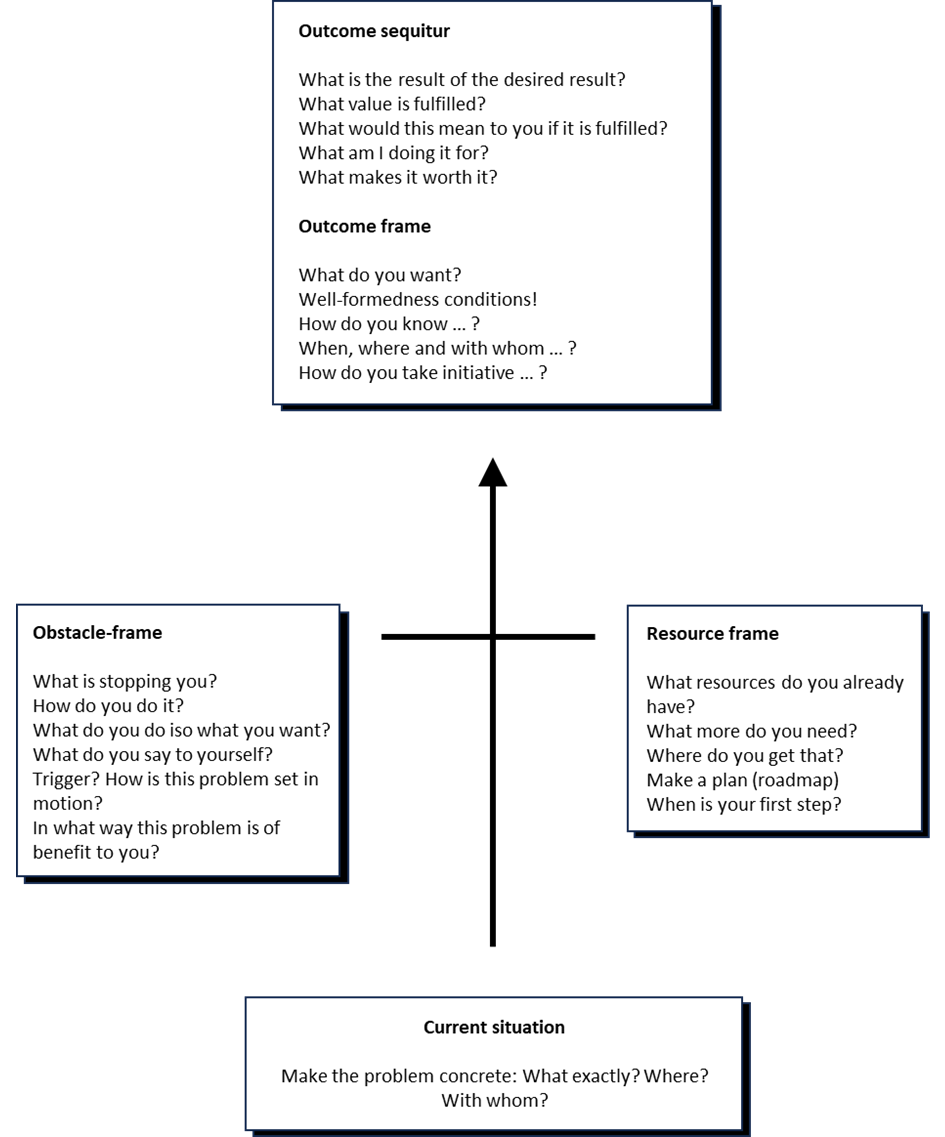
This includes the current situation, obstacles, resources and the broader impact of achieving the outcome.
By clarifying these elements, the Outcome Model transforms vague ambitions into actionable directions.
Why Many Goals Fail
People often set goals that are unclear or poorly structured.
Common examples include statements such as:
- “I want to be more successful.”
- “I want a better job.”
- “I want to improve my communication.”
While these intentions are positive, they lack specificity.
Without clear definitions the brain cannot effectively organize behavior toward the goal.
The NLP Outcome Model addresses this problem by guiding individuals through a structured process that clarifies what they want and how they will recognize success.
The Difference Between Problem Focus and Outcome Focus
A key insight within NLP is that people often focus more on problems than on outcomes.
For example, someone may say:
- “I don’t want stress in my job.”
- “I don’t want conflict with my colleagues.”
- “I don’t want to feel stuck in my career.”
The difficulty with this type of thinking is that it focuses attention on what someone wants to avoid rather than what they want to achieve.
In NLP this is described as mismatch language.
Outcome-oriented thinking uses matching language, focusing on the desired state.
Instead of asking:
“What do I want to avoid?”
The question becomes:
“What do I want instead?”
This shift in thinking significantly influences behavior and decision-making.
The Current Situation
The Outcome Model begins with understanding the present state.
Before defining a goal it is essential to understand the starting point.
Key questions include:
- What is the current situation?
- What specifically makes this situation problematic or unsatisfactory?
- How do I know this is a problem?
Clarifying the current situation creates awareness of the gap between present reality and the desired outcome.
Without this clarity it is difficult to determine what needs to change.
Defining the Desired Outcome
The next step is defining the outcome.
An effective outcome must meet several criteria.
- Positive formulation
The outcome should describe what you want rather than what you want to avoid.
- Personal control
The outcome should depend primarily on your own actions rather than the behavior of others.
The outcome should be described in observable terms.
Questions that help clarify the outcome include:
- What will I see when the goal is achieved?
- What will I hear?
- What will I feel?
These sensory details make the goal more concrete.
- Context
An outcome must also be defined within a specific context.
Questions include:
- Where do I want this outcome to occur?
- When should it happen?
- With whom?
Defining context prevents confusion and ensures the outcome is realistic.
- Evidence
The Outcome Model emphasizes the importance of defining evidence.
Evidence answers the question:
How will I know that I have achieved my goal?
For example:
A professional who wants to improve communication might define evidence such as:
- receiving positive feedback from colleagues
- leading meetings confidently
- resolving conflicts effectively
Evidence transforms abstract intentions into measurable indicators.
- Resources
Every goal requires resources.
Resources may include:
- knowledge
- skills
- support from others
- tools or technology
Identifying available resources helps individuals recognize strengths they can leverage.
At the same time it reveals resources that may still need to be developed.
- Obstacles
Obstacles represent factors that currently prevent the outcome from being achieved.
These obstacles may include:
- limiting beliefs
- lack of experience
- external constraints
Understanding obstacles allows individuals to design strategies that address them directly.
- Ecology
An important element of the Outcome Model is ecological thinking.
Ecology refers to the broader impact of achieving the outcome.
Questions include:
- How will this outcome affect my life?
- What will change in my relationships or work environment?
- Are there unintended consequences?
Considering these questions ensures that the outcome aligns with personal values and long-term well-being.
The Outcome Model as a Decision Framework
Beyond goal setting, the Outcome Model also functions as a powerful decision-making tool.
Professionals can apply the model when evaluating opportunities, career choices or strategic decisions.
By examining outcomes, resources and potential consequences, individuals gain a clearer perspective on their options.
Conclusion
The NLP Outcome Model provides a structured approach to defining goals and designing change.
By clarifying the desired outcome, understanding the current situation and identifying resources and obstacles, individuals transform vague ambitions into actionable directions.
This process increases the likelihood of meaningful and sustainable results.





Add comment